
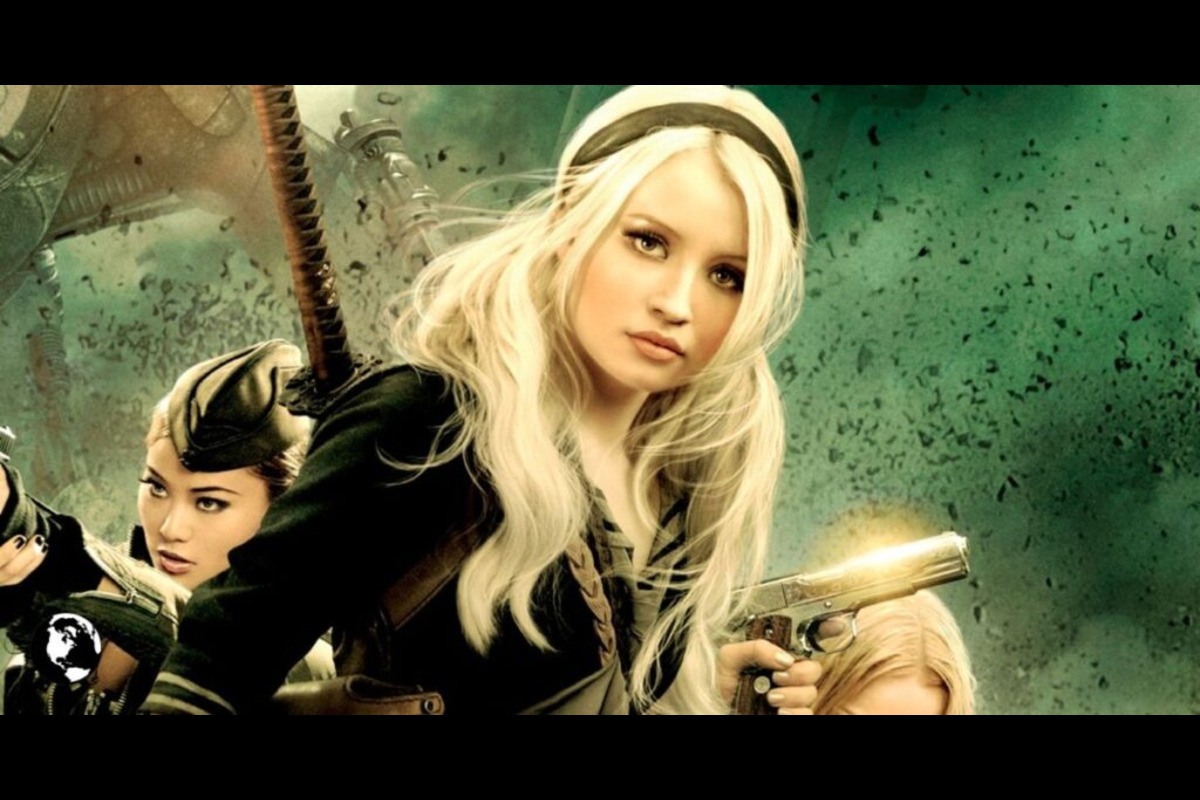
SuckernPunch, released on March 25, 2011, is an action-fantasy film directed by Zack Snyder, known for his bold visual storytelling. Born from Snyder’s vision of merging surreal fantasy with emotional depth, the film introduced audiences to Babydoll, a young woman navigating between different realities. Starring Emily Browning, Abbie Cornish, Vanessa Hudgens, and Jena Malone, it blends action, drama, and symbolism. With a production budget exceeding $75 million, Sucker Punch became one of Snyder’s most talked-about works. Its unique mix of style and story earned it both cult status and harsh criticism. To this day, Sucker Punch is remembered for its bold aesthetic and the cultural debate it sparked.
The World of SuckernPunch
Sucker Punch tells the story of Babydoll, a young woman committed to a psychiatric hospital after being betrayed by her stepfather. To cope with the trauma, Babydoll escapes into alternate realities where she and other inmates fight for freedom.
These worlds shift and transform, alternating between dark brothels and dreamlike battlefields teeming with dragons, robots, and samurai. Each of these fantastical worlds represents a desperate attempt to regain control in a world that has stripped her of all autonomy.
The title “SuckernPunch” reflects the film’s objective: to shock the viewer with an unexpected emotional and visual impact.
Visual Style and Cinematic Aesthetics
Zack Snyder’s style is unmistakable, and in SuckernPunch, he takes it to the extreme. Every sequence overflows with stylized imagery:
Samurai towering over Babydoll. Dystopian cityscapes teeming with steam-powered soldiers. A dragon battle that evokes the fusion of myth and modern fantasy. These moments make Suckernpunch both a work of art and a narrative. While critics have often complained that the visuals overshadow the story, its admirers argue that the style is the story itself. Each image is a painting that immerses the viewer in Babydoll’s fragmented fantasy world. Narrative Layers and Complexity
The structure of Suckernpunch is deliberately complex. On the surface is the asylum. Beneath it lies a brothel, reinterpreted by Babydoll’s mind. Within this setting exist other fantasy worlds where quests and battles unfold.
This multi-layered approach confuses some viewers but delights others who see it as experimental storytelling. The fragmented structure reflects Babydoll’s tormented psyche. Suckernpunch invites the audience to discover meaning for themselves, rather than presenting a linear story.
Symbolism and Hidden Meanings
Beyond its visual spectacle, SuckernPunch is rich in symbolism. The four objects Babydoll seeks—a map, fire, a knife, and a key—represent survival, knowledge, and sacrifice.
The asylum symbolizes patriarchal control. The brothel transforms this control into a metaphor for exploitation. The fantastical worlds highlight inner resistance and resilience.
For some viewers, Sucker Punch becomes a story about how fantasy can be both a prison and a weapon. Others find the symbolism convoluted and hidden beneath the excessive spectacle.
Feminist Criticism and Gender Debates
Few films have generated as much debate about gender roles as SuckernPunch. On the one hand, the film depicts its female protagonists in revealing costumes, participating in stylized and spectacular battles. Critics argue that this reduces the characters to objects of visual desire.
However, its defenders argue that SuckernPunch doesn’t glorify exploitation, but rather exposes it. By exaggerating the sexualization, Snyder might be reflecting the way women are treated in society.
This duality makes Sucker Punch a highly controversial film. Is it feminist or anti-feminist? Exploitative or critical of exploitation? The lack of a clear answer keeps the debate alive.
you might also like: Gayfirir: The bold new word that is changing identity and culture
Music and Atmosphere as Narrative Tools
The Sucker Punch soundtrack deserves special mention. Instead of relying solely on original compositions, Snyder reinterpreted existing songs to enhance the atmosphere of each scene. Emily Browning, who plays Babydoll, sang moving versions of classics like “Sweet Dreams (Are Made of This).”
The music in Sucker Punch isn’t mere background music; it evokes emotions, sets the pace, and creates atmosphere. The action sequences are synchronized with the sound, transforming the fight scenes into veritable cinematic dances.
The Role of Fantasy and Escapism
At its core, Sucker Punch is about escapism. For Babydoll and her companions, fantasy becomes a survival instinct. The grim asylum transforms into dreamlike worlds where they wield weapons, confront monsters, and seek freedom.
This theme resonates with viewers beyond the screen. Many interpret Sucker Punch as a metaphor for coping with trauma. Escapism can be criticized as a form of avoidance, but in this context, it becomes an act of resilience.
Impact and Cultural Reception
Upon its release, Sucker Punch was heavily criticized. Rotten Tomatoes gave it low scores, and many critics described its style as superficial. Metacritic echoed this assessment, classifying it as “generally unfavorable.”
Despite the negative reviews, Sucker Punch has achieved cult status. Its fans analyze its themes, defend its ambition, and argue that it was ahead of its time. Online communities repeatedly consider it a misunderstood experiment that defied cinematic conventions.
Legacy and the Director’s Cut
Over the years, Zack Snyder has hinted at the existence of a director’s cut of Sucker Punch that is closer to his vision. Fans hope that this version will answer lingering questions and strengthen the narrative.
Regardless of whether the director’s cut is ever released, Sucker Punch has earned its place in discussions about modern cinema. It represents audacity in commercial cinema: a film unafraid of controversy.
conclusion
“SuckernPunch” defies easy categorization. It is visually stunning, narratively experimental, and symbolically rich. The portrayal of women elicits both criticism and support. The music intensifies the atmosphere, while the fantastical elements highlight the human need for escapism.
Ultimately, it is the interplay of style, story, and symbolism that defines “Sucker Punch.” It remains a film that challenges expectations, sparks debate, and refuses to fade into obscurity. Whether considered flawed or visionary, it continues to deliver the sudden emotional impact its title evokes.